
If you have ever stepped foot in a Thai restaurant or wandered through the bustling night markets of Bangkok, you have likely seen the iconic, neon-orange glow of Thai Iced Tea. This isn’t just a drink; it’s a cultural staple known as Cha Yen. Combining the deep, earthy notes of spiced black tea with the luxurious creaminess of sweetened milk, it is the ultimate refreshment. When you add the chewy, addictive texture of tapioca pearls—better known as boba—you transform a classic beverage into a modern dessert experience. Making this at home is surprisingly simple, yet it yields a flavor far superior to the diluted versions often found in plastic cups. In this guide, I will show you how to master the perfect steep, the secret milk blend, and the ideal boba texture for a professional-grade drink.
Why You’ll Love This Recipe
You are going to fall in love with this Thai Iced Tea recipe because it strikes the perfect balance between professional technique and home-kitchen simplicity. Unlike store-bought mixes that often taste artificial, this version uses a specific blend of Thai tea leaves and extra black tea to ensure the flavor is robust enough to stand up to the ice and milk. It is incredibly cost-effective, saving you five or six dollars per cup compared to your local boba shop. Plus, you have total control over the sweetness level and the quality of your ingredients. There is something uniquely satisfying about watching the thick milk mixture swirl into the orange tea, creating those beautiful, Instagram-worthy marble patterns right in your own kitchen.
What Is Thai Iced Tea with Boba?
Thai Iced Tea, or Cha Yen, is a traditional Thai beverage made from strongly brewed black tea flavored with star anise, crushed tamarind seed, and sometimes cardamom or cinnamon. The signature orange color originally came from the soil where the tea was grown, but modern mixes use food coloring to maintain that iconic look. Historically, it was served as a street food staple, intended to be very sweet to combat the intense heat of the region. The addition of “Boba” or tapioca pearls is a modern twist influenced by Taiwanese bubble tea culture. These pearls are made from tapioca starch, providing a “QQ” (chewy) texture that turns a refreshing drink into a fun, interactive snack.
Ingredients
To achieve that authentic restaurant taste, your ingredient choice matters more than you might think. Here is a breakdown of what you’ll need:
- Thai Tea Mix: Look for brands like Pantai or ChaTraMue. These contain the essential spices and the orange tint that defines the drink.
- Black Tea: I recommend adding a teaspoon of high-quality loose-leaf black tea (like Assam or Ceylon). This provides extra tannins and “backbone” to the drink, ensuring the tea flavor isn’t lost when the milk is added.
- Filtered Water: Using filtered water at exactly 195°F prevents the tea from becoming bitter or astringent.
- The Sweeteners: Brown sugar is used for the tea base to provide a molasses-like depth. However, the real magic happens with the Sweetened Condensed Milk and Evaporated Milk. The condensed milk provides the thick, syrupy sweetness, while the evaporated milk adds a toasted, creamy richness without the watering-down effect of regular milk.
- Tapioca Balls: Standard black boba pearls are best. They should be cooked until they are soft and “bouncy.”
- Ice: Crushed ice or small cubes are traditional, as they chill the drink rapidly and create a better surface area for the milk to rest on.
Ingredient Substitutions & Tips
If you need to pivot based on what’s in your pantry, here are a few expert tips. For a dairy-free version, replace the evaporated and condensed milk with sweetened condensed coconut milk and full-fat coconut milk from a can. The coconut flavor actually complements the Thai spices beautifully. If you don’t have brown sugar, granulated sugar or honey will work, though the flavor profile will be slightly lighter. For the boba, if you cannot find traditional tapioca pearls, you can experiment with “popping boba” or even grass jelly, though the cooking method will differ. Always ensure your boba is fresh; stale pearls turn hard and grainy in the center.
Step-by-Step Instructions
1. The Perfect Steep
Begin by heating one cup of filtered water to 195°F. In a heat-proof pitcher or large mug, combine 1 tablespoon of Thai tea mix and 1 teaspoon of black tea. Pour the water over the leaves and let it steep for exactly 5 minutes. If you go longer, the tea will become bitter. Strain the tea through a fine-mesh sieve or a traditional Thai tea “sock” (a cloth strainer). While the tea is still piping hot, stir in 1 tablespoon of brown sugar until completely dissolved. Set this aside to cool to room temperature or refrigerate if you’re not serving immediately.
2. Cooking the Boba
Bring 3/4 cup of water to a rolling boil in a small saucepan. Add 1/4 cup of tapioca balls. Once they float to the surface, reduce the heat to medium-high and cook for 8-10 minutes. Stir occasionally to prevent sticking. After cooking, turn off the heat and let them sit in the hot water for another 5 minutes to ensure the centers are fully hydrated. Drain the pearls and rinse briefly with warm water. Crucial Tip: Keep the boba warm; if they get cold, they lose their chewiness.
3. The Signature Milk Mixture
In a small bowl, whisk together 2 tablespoons of sweetened condensed milk and 1/4 cup of evaporated milk. This “double-milk” method is the secret used by professional boba shops to get that rich, velvety mouthfeel.
4. Assembly
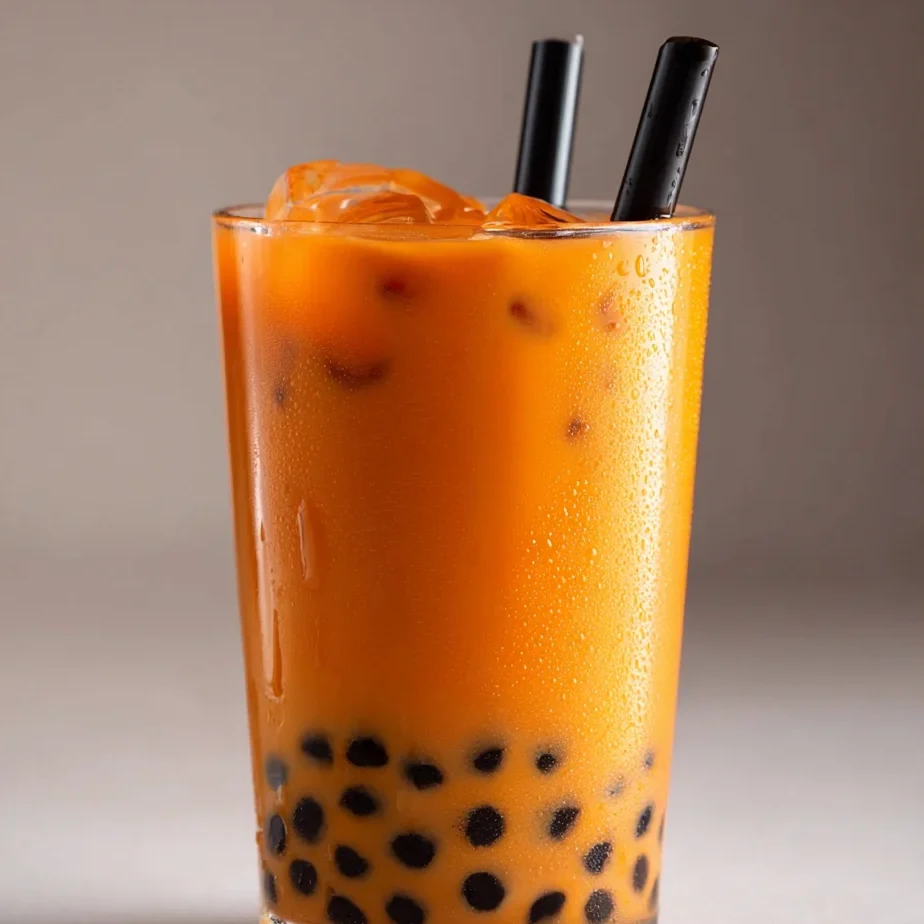
Place your warm boba at the bottom of a tall glass. Fill the glass to the brim with ice. Pour your cooled tea over the ice, leaving about an inch of space at the top. Finally, slowly pour your milk mixture over the tea. You will see the white milk cascade down through the orange tea, creating a beautiful gradient.
Expert Cooking Tips
The most common mistake people make is using regular milk. Regular milk has too high a water content, which makes the drink taste thin once the ice begins to melt. Evaporated milk is the key to that “canned milk” flavor that defines Southeast Asian beverages. Additionally, always use a thermometer for your water. If the water is boiling (212°F), it can “scorch” the delicate spices in the tea mix. Lastly, never refrigerate your cooked boba. The starch undergoes retrogradation in the fridge, turning the pearls from chewy to rock-hard. Always make your boba fresh for the best experience.
Special Section: Achieving the Perfect Layer
To get that professional “layered” look that you see in photos, the temperature and density of your ingredients are key. The tea should be room temperature or slightly chilled, while the milk mixture should be slightly heavier (which it is, thanks to the condensed milk). When you pour the milk slowly over a spoon or directly onto a large ice cube at the top of the glass, the milk will stay suspended briefly before slowly “bleeding” into the tea. This creates a stunning visual effect that lasts for several minutes before you stir it all together to enjoy.
Serving Suggestions
Serve your Thai Iced Tea immediately while the boba are still warm and the ice is fresh. You must use a wide boba straw (usually 12mm in diameter) so that you can suck up the tapioca pearls along with the tea. This drink pairs excellently with spicy Thai dishes like Pad Thai or Green Curry, as the creamy sweetness helps neutralize the heat of the chili.
Storage & Make-Ahead Tips
The tea base (tea + brown sugar) can be made in large batches and stored in a sealed glass jar in the refrigerator for up to 4 days. However, do not add the milk or boba until you are ready to serve. As mentioned, boba must be eaten within 4 hours of cooking. If you have leftover tea, it also makes for a fantastic Thai tea popsicle if frozen in molds!
FAQs
Q: Why is Thai tea orange?
A: Originally, the color came from the specific minerals in the soil, but today it is achieved through food-grade coloring in the tea mix to maintain the traditional aesthetic.
Q: Can I make this caffeine-free?
A: It is difficult because the “Thai tea mix” itself is a black tea base. You would need to find a specific herbal “Thai-style” spice blend, which is rare.
Q: Is boba gluten-free?
A: Most tapioca pearls are made from tapioca starch (derived from cassava root), which is naturally gluten-free. However, always check the packaging for cross-contamination.
Q: How many calories are in Thai Iced Tea with Boba?
A: A standard serving is approximately 350-400 calories, depending on the amount of condensed milk and boba used.
Q: Can I use instant boba?
A: Yes, “5-minute” or instant boba works well for quick cravings, but the texture is slightly less “bouncy” than traditional pearls.
Final Thoughts
Making Authentic Thai Iced Tea with Boba at home is a rewarding ritual that brings a taste of the exotic to your kitchen. By using the dual-milk technique and high-quality tea leaves, you’ll create a beverage that is both a visual masterpiece and a culinary delight. Whether you’re hosting a summer party or just treating yourself after a long day, this creamy, chewy, and vibrant drink is sure to be a hit. Don’t forget your wide straw!
PrintAuthentic Thai Iced Tea with Boba
A decadent and authentic Thai Iced Tea (Cha Yen) featuring a rich spice-infused tea base and chewy tapioca pearls. This recipe uses the traditional dual-milk method for that iconic creamy finish.
- Prep Time: 10 minutes
- Cook Time: 10 minutes
- Total Time: 20 minutes
- Yield: 1 large drink
- Cuisine: Thai
Ingredients
Thai tea mix – 1 tablespoon
Black tea (loose leaf or 1 bag) – 1 teaspoon
Filtered water – 1 cup
Brown sugar – 1 tablespoon
Evaporated milk – 1/4 cup
Sweetened condensed milk – 2 tablespoons
Ice cubes – 1 cup
Tapioca balls (Boba) – 1/4 cup
Water for boiling boba – 3/4 cup
Instructions
Steep the Tea: Combine Thai tea mix and black tea in hot water (195°F) for 5 minutes.
Sweeten: Strain the tea leaves and immediately stir in the brown sugar until dissolved. Set aside to cool.
Cook Boba: Bring water to a boil in a small saucepan. Add tapioca balls and cook on medium-high for 8-10 minutes, stirring occasionally.
Drain: Remove boba from water and let them cool until warm but not hot.
Prepare Milk: In a separate small container, whisk together the evaporated milk and sweetened condensed milk.
Assemble: Place the warm boba at the bottom of a tall glass. Fill with ice, then pour over the tea.
Finish: Pour the milk mixture over the top, stir, and serve with a wide straw.
Notes
• Use filtered water for the cleanest tea flavor profile.
• Do not over-steep the tea or it will become unpleasantly bitter.
• Keep boba warm before serving to maintain their soft, chewy texture.
• For a “tiger sugar” effect, swirl a little extra condensed milk around the glass before adding tea.