
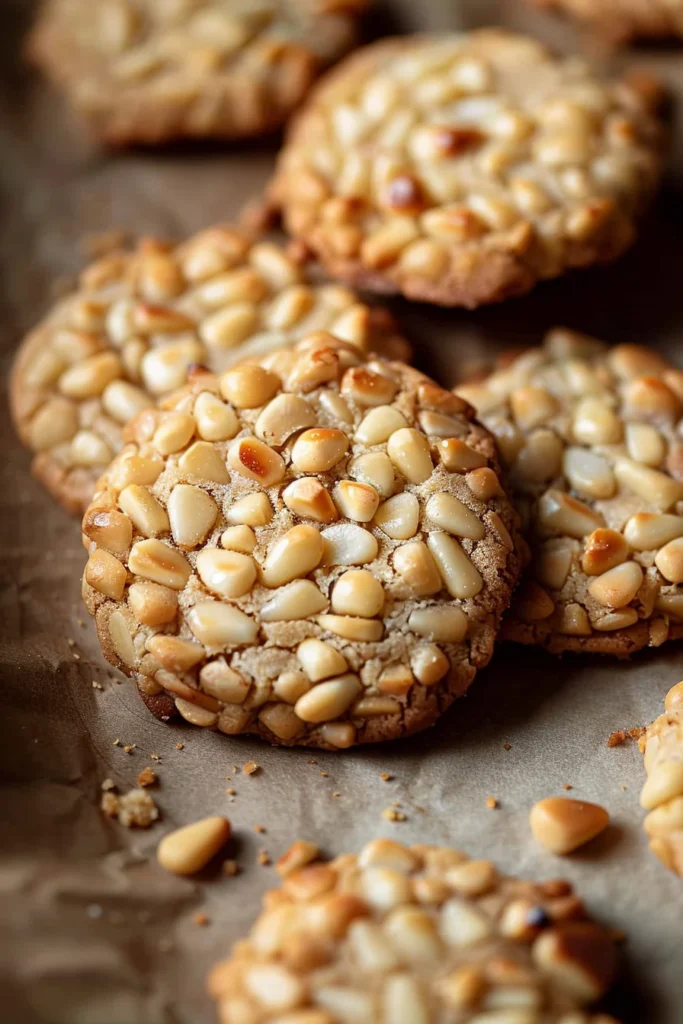
If you have ever walked past a traditional Italian pasticceria, you have likely been beckoned by the sweet, nutty aroma of freshly baked almond treats. Among the cannoli and rainbow cookies, one jewel stands out: the Pignoli cookie. These golden-brown treasures are the epitome of Italian holiday baking, prized for their soft, marzipan-like interior and the crunch of toasted pine nuts on the outside. Despite their luxury status and high price tag in bakeries, they are surprisingly simple to make at home. With just four ingredients and less than thirty minutes, you can recreate this Sicilian classic in your own kitchen. Whether you are looking for a sophisticated addition to your Christmas cookie platter or a naturally gluten-free dessert that feels truly indulgent, this Pignoli recipe is your foolproof guide to success.
Why You’ll Love This Recipe
This Pignoli cookie recipe is a favorite for home bakers because it offers a high reward for very little effort. First, it requires only four basic ingredients, making it accessible even for novice bakers. Because the recipe relies on almond paste rather than wheat flour, these cookies are naturally gluten-free and grain-free, making them an inclusive option for guests with dietary restrictions. The texture is a masterclass in contrasts: a crackly, nutty exterior that gives way to a center so chewy it’s almost like fudge. Furthermore, these cookies have incredible staying power; they remain moist and delicious for days, and the dough is exceptionally freezer-friendly for those who like to plan ahead.
What Is a Pignoli Cookie?
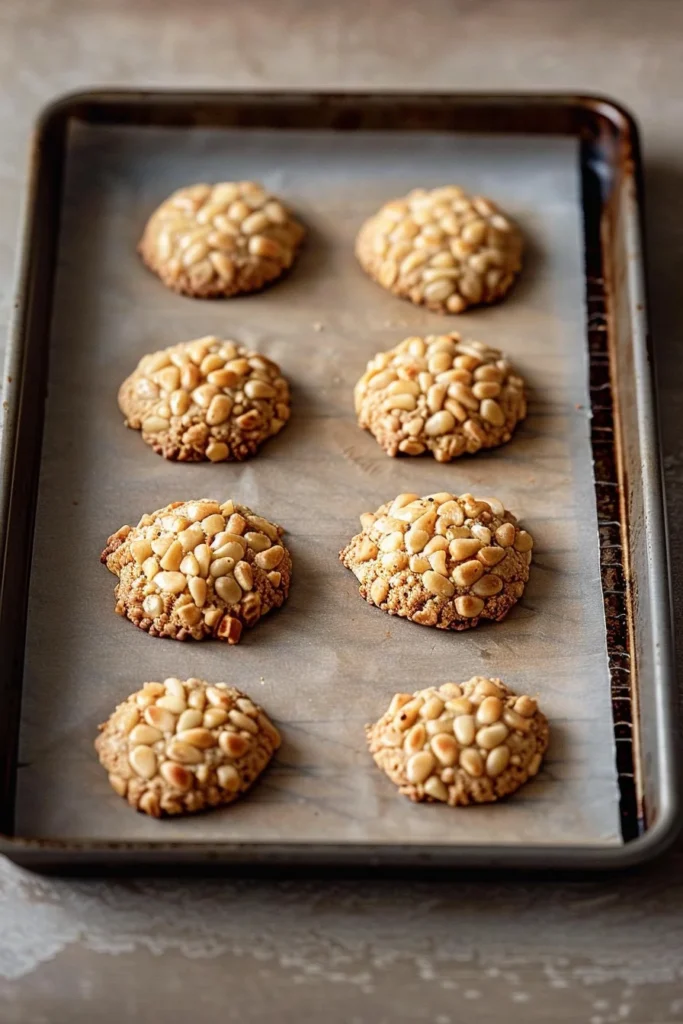
Pignoli cookies (or amaretti ai pinoli) are a traditional Italian confection originating from Sicily. They are a staple of Southern Italian celebrations, particularly during Christmas and Easter, and are frequently served at Italian weddings. The “pignoli” name comes from the Italian word for pine nuts, which cover the surface of the cookie. Historically, these cookies represent the intersection of Mediterranean ingredients—almonds and pine nuts—both of which grow abundantly in the Italian landscape. Unlike many other cookies that rely on butter and flour for structure, the Pignoli cookie uses egg whites and almond paste, resulting in a dense, macaroon-like consistency that has remained a beloved culinary tradition for centuries.
Ingredients Overview
To achieve bakery-quality results, the quality of your ingredients is paramount.
- Almond Paste (7 ounces): This is the heart of the cookie. It is a blend of ground almonds and sugar. Be very careful not to confuse this with marzipan. Almond paste is coarser and less sweet, providing the structural integrity needed for the cookie to hold its shape while remaining moist.
- Granulated Sugar (1/2 cup): This adds necessary sweetness and helps the edges of the cookie caramelize into a beautiful golden hue during the baking process.
- Egg White (1 large): The egg white acts as the sole binder in this recipe. It transforms the crumbly almond mixture into a cohesive, pipeable, or rollable dough. Using a room-temperature egg white helps it incorporate more smoothly.
- Pine Nuts (1 cup): These are the crowning glory. Pine nuts (pignoli) provide a buttery, resinous flavor and a satisfying crunch. While they can be expensive, they are what define this cookie. Look for Italian or Mediterranean pine nuts if possible, as they have a superior oil content compared to some other varieties.
Ingredient Substitutions & Tips
While the traditional recipe is perfection, there are a few ways to pivot. If pine nuts are outside of your budget, you can substitute them with slivered or sliced almonds for a “Mandorla” style cookie. The flavor profile remains similar, though the texture changes. Regarding the almond paste, if you are using a brand that is particularly firm, you may want to grate it with a box grater before mixing to ensure no large lumps remain. For a citrusy twist, some bakers like to add a teaspoon of lemon or orange zest to the dough, which complements the almond flavor beautifully.
Step-by-Step Instructions
- Preparation: Begin by preheating your oven to 350°F (175°C). The temperature is crucial; too low and the cookies won’t brown, too high and the pine nuts will burn before the center cooks. Line a large rimmed baking sheet with parchment paper. Do not grease the pan directly, as these cookies are prone to sticking.
- Combine Almonds and Sugar: Place your almond paste (broken into chunks) and granulated sugar into a food processor. Pulse the mixture until it resembles fine, sandy crumbs. This step ensures the sugar is evenly distributed and the almond paste is fully aerated.
- Form the Dough: Add the egg white. Process again until the mixture pulls together into a smooth, thick paste. It should be tacky but hold its shape when pressed.
- The Pine Nut Coating: Pour your pine nuts into a small, shallow bowl. Using a small cookie scoop or a tablespoon, portion out the dough. Roll each portion between your palms into a 1-inch ball.
- Rolling and Pressing: Drop each ball into the pine nuts. Roll it around, then gently press the nuts into the surface of the dough. You want the ball to be heavily encrusted.
- Baking: Place the balls on the prepared sheet, leaving 2 inches of space between them. They will puff slightly but won’t spread excessively.
- Cooling: Bake for 15-18 minutes. The cookies are done when the nuts are golden and the almond peaks between the nuts are a light tan. Allow them to cool on the baking sheet for at least 10 minutes. This “carryover” time allows the sugars to set so the cookies don’t tear when moved.
Expert Baking/Cooking Tips
- The Stickiness Factor: If you find the dough is sticking to your hands during the rolling process, lightly dampen your palms with water. This prevents the dough from clinging to you while allowing the pine nuts to stick to the cookie.
- Avoid Overbaking: Pignoli cookies should be chewy. If they look “dry” in the oven, they are likely overdone. They should still feel slightly soft to the touch when you pull them out.
- Parchment is Mandatory: Because of the high sugar and almond oil content, these cookies are notorious for sticking to metal pans. Always use high-quality parchment paper or a Silpat silicone mat for an easy release.
Special Section: Almond Paste vs. Marzipan
A common mistake for home bakers is reaching for marzipan instead of almond paste. While they are both made from almonds, they are not interchangeable. Marzipan has a much higher sugar-to-almond ratio and is often ground into a very fine, smooth paste designed for molding or covering cakes. If you use marzipan in this recipe, your cookies will lack the necessary almond structure, they will be cloyingly sweet, and they will likely melt into flat puddles on your baking sheet. Always check the label to ensure you are buying “Almond Paste,” which usually contains about 50% almonds.
Serving Suggestions
Pignoli cookies are best served alongside a strong cup of Italian espresso or a glass of dessert wine like Vin Santo. Because of their elegant appearance, they are perfect for gifting in decorative tins or serving as the centerpiece of a holiday dessert platter. They also pair wonderfully with fresh berries or a scoop of vanilla bean gelato for a plated dessert.
Storage & Make-Ahead Tips
Store cooled cookies in an airtight container at room temperature for up to 7 days. If you need to store them longer, these cookies freeze beautifully. To freeze, place them in a single layer on a tray until solid, then transfer to a freezer-safe bag for up to 3 months. You can also freeze the raw dough (unrolled) for up to a month; simply thaw it in the fridge overnight before shaping and baking.
FAQs
1. Why are my pignoli cookies flat?
Flat cookies usually result from using marzipan instead of almond paste, or from egg whites that were too large, making the dough too wet. Ensure you use a “large” egg white and true almond paste.
2. Why are pine nuts so expensive?
Pine nuts are harvested from the cones of specific pine tree species. The process is labor-intensive and takes years for trees to produce cones, leading to a higher market price.
3. Can I make these without a food processor?
Yes! You can use a stand mixer with a paddle attachment or even a pastry cutter, though it will take more physical effort to break down the almond paste into fine crumbs.
4. Are these cookies dairy-free?
Yes, this recipe is naturally dairy-free as it contains no butter or milk.
5. How do I keep the pine nuts from falling off?
Make sure to press the nuts gently into the dough ball. The natural stickiness of the egg-white-based dough should act as a glue.
Italian Pignoli Cookies
These classic Italian Pignoli cookies are a staple in Sicilian bakeries. With a crisp, golden exterior of toasted pine nuts and a soft, chewy almond center, they are the ultimate gluten-free treat for the holidays.
- Prep Time: 10 minutes
- Cook Time: 18 minutes
- Total Time: 28 minutes
- Yield: 18 cookies
- Cuisine: Italian
Ingredients
Almond paste – 7 ounces
Granulated sugar – 1/2 cup
Egg white – 1 large
Pine nuts (pignoli) – 1 cup
Instructions
Preheat your oven to 350°F (175°C). Line a large baking sheet with parchment paper or a silicone baking mat.
Break the almond paste into small chunks. Place the chunks and granulated sugar into a food processor or stand mixer.
Pulse or beat the mixture until it reaches the consistency of fine, uniform crumbs.
Add the egg white to the mixture. Process or beat on medium speed until a smooth, thick, and slightly sticky dough forms.
Place the pine nuts in a shallow bowl or plate.
Scoop approximately 1 tablespoon of dough at a time and roll between your palms to form a ball.
Roll the dough ball in the pine nuts, pressing gently so the nuts adhere and cover the entire surface.
Arrange the balls on the prepared baking sheet, spaced 2 inches apart.
Bake for 15 to 18 minutes, or until the pine nuts are golden brown and the edges are set.
Allow the cookies to cool on the pan for 5-10 minutes before transferring them to a wire rack to cool completely.
Notes
• If the dough is too sticky to handle, chill it in the refrigerator for 15 minutes before rolling.
• Ensure you use almond paste, not marzipan, as the sugar ratios are vastly different.
• Store in an airtight container at room temperature for up to 7 days or freeze for up to 3 months.
• To save money, you can substitute half the pine nuts with slivered almonds, though it won’t be traditional.