
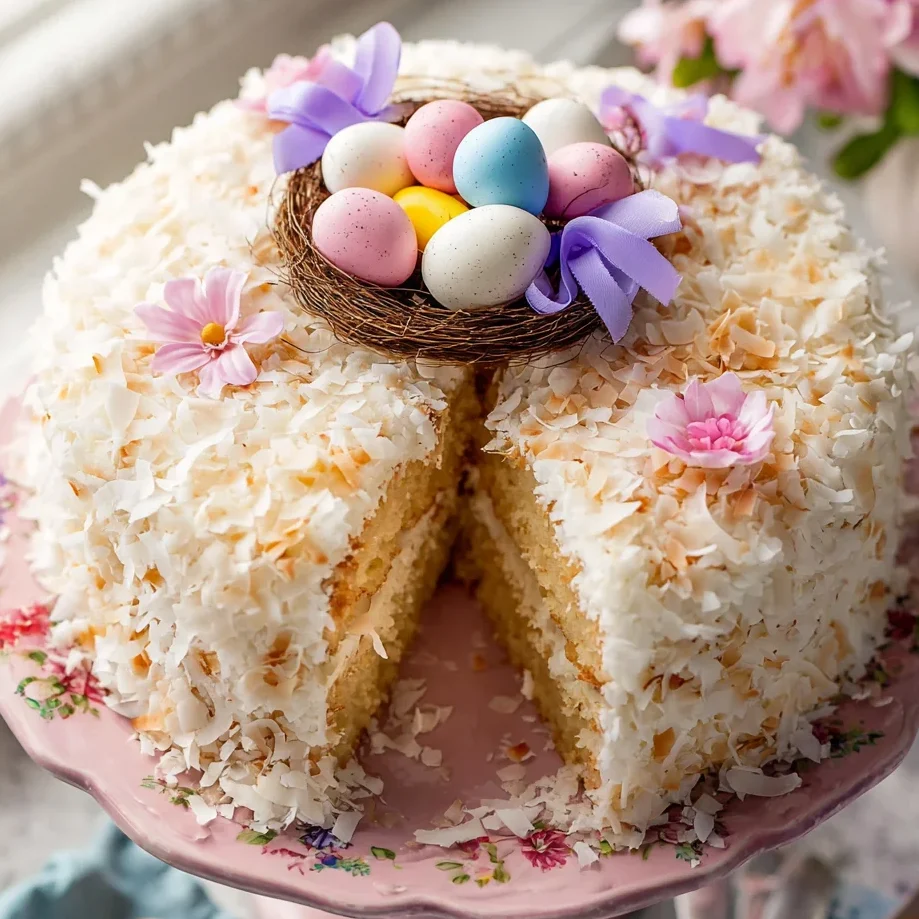
As the frost of winter fades and the first daffodils begin to peek through the soil, our kitchens naturally pivot toward brighter, fresher flavors. There is no dessert more synonymous with spring celebrations than a beautifully structured Bundt cake. This Lemon Coconut Easter Bundt Cake is the crown jewel of the season, offering a symphony of zesty citrus and tropical sweetness. Whether you are hosting a traditional Easter brunch or simply looking for a way to welcome the sunshine, this cake delivers a moist, tender crumb and a whimsical aesthetic that charms guests of all ages. By transforming the center of the cake into a “nest” for candy-coated eggs, you create a centerpiece that is as much a decoration as it is a treat. Let’s dive into the science and art of creating this perfect spring bake.
Why You’ll Love This Recipe
You will fall in love with this recipe because it achieves the perfect balance between density and lightness. Many coconut cakes can become dry or overly heavy, but the addition of sour cream and vegetable oil ensures a crumb that stays moist for days. The flavor profile is meticulously layered; the lemon zest is creamed directly into the butter to release its essential oils, while the coconut extract provides a subtle, toasted depth that enhances the shredded coconut throughout the batter. It is also incredibly versatile—while we’ve styled it for Easter, the base recipe is a sophisticated lemon-coconut combination that shines year-round at garden parties or summer potlucks. Plus, the Bundt format means no fussy layer-cake assembly is required!
What Is A Lemon Coconut Bundt Cake?
A Bundt cake is defined by its distinctive ring shape, inspired by the European Gugelhupf. Unlike traditional sponge cakes, Bundt cakes are often denser and more robust, designed to hold the intricate patterns of the pan. This specific version celebrates the “Easter Nest” tradition. By utilizing the hollow center of the cake, we create a landing spot for pastel candy eggs, while the shredded coconut topping mimics the appearance of a bird’s nest. Historically, coconut became a popular Easter ingredient in the United States during the mid-20th century, often paired with lemon to cut through the richness of cream cheese frostings. This recipe honors that heritage while utilizing modern baking techniques for superior texture and flavor.
Ingredients needed
To achieve a bakery-quality result, every ingredient in this Lemon Coconut Easter Bundt Cake serves a specific structural or flavorful purpose.
- Cake Flour (360g): Unlike all-purpose flour, cake flour has a lower protein content (about 7-9%), which prevents excessive gluten formation. This results in a “fine” crumb that melts in your mouth.
- Unsalted Butter & Vegetable Oil: We use both to get the best of both worlds. Butter provides that classic, rich flavor and aids in aeration during the creaming process, while oil ensures the cake remains moist even when refrigerated.
- Lemon Zest & Juice: We use a heaping tablespoon of zest for aromatic intensity and fresh juice in the batter and frosting for a sharp, clean acidity.
- Full-Fat Sour Cream: This is the secret to a tender cake. The acidity in sour cream tenderizes the gluten, while the high fat content adds moisture without thinning the batter.
- Sweetened Shredded Coconut: This provides texture and moisture. Using sweetened coconut is vital here, as unsweetened varieties can sometimes draw too much moisture out of the batter, leading to a dry cake.
- Large Eggs: Five eggs provide the necessary structure and emulsification to hold this rich batter together.
Ingredient Substitutions & Tips
If you find yourself missing an ingredient, there are several reliable swaps you can make. If you don’t have cake flour, you can make a substitute by removing 2 tablespoons of all-purpose flour from every cup and replacing them with 2 tablespoons of cornstarch; sift this mixture multiple times to ensure even distribution. For the sour cream, a full-fat plain Greek yogurt works beautifully and offers a similar acidic profile. If you prefer a dairy-free option, coconut milk (the canned, full-fat version) can replace the whole milk, though the texture may vary slightly. Lastly, if you aren’t a fan of coconut extract, simply double the vanilla extract for a more traditional “Lemon-Cloud” flavor profile.
Step-by-Step Instructions
- Preparation: Begin by preheating your oven to 350°F (177°C). The most critical step for any Bundt cake is greasing the pan. Use a baking spray with flour or a generous coating of softened butter followed by a dusting of flour.
- Dry Ingredients: In a medium bowl, whisk together your cake flour, baking powder, baking soda, and salt. Sifting these together ensures there are no clumps of leavening agents.
- The Creaming Method: In a large stand mixer, beat the butter for 1 minute until creamy. Add the sugar and lemon zest. Beat on high for a full 3 minutes. This process, called “creaming,” creates tiny air pockets that help the cake rise.
- Emulsifying: Mix in the oil. Add the eggs one at a time, allowing each to incorporate before adding the next. Finally, stir in the sour cream, vanilla, and coconut extracts.
- The Alternating Addition: Whisk the milk and lemon juice together. With the mixer on low, add 1/3 of the dry ingredients, followed by 1/2 of the milk mixture. Repeat, ending with the dry ingredients. Mix until just combined—overmixing at this stage will make the cake tough.
- The Fold: Gently fold in the shredded coconut by hand using a spatula.
- Baking: Pour the batter into the prepared pan. Bake for 55–65 minutes. If the top browns too quickly, tent it with foil at the 30-minute mark.
- Cooling and Frosting: Cool in the pan for 2 hours. This is non-negotiable! The cake needs time to “set” its structure. Once cooled, invert and frost with the lemon cream cheese mixture.
Expert Baking Tips
To ensure your Lemon Coconut Easter Bundt Cake comes out perfectly every time, follow these expert tips. First, temperature matters. Ensure your eggs, milk, and sour cream are at room temperature. Cold ingredients can cause the batter to “seize” or curdle, leading to an uneven bake. Second, measure your flour correctly. Use the “spoon and level” method rather than dipping the measuring cup directly into the flour bag, which packs the flour down and leads to a dry, dense cake. Third, when it comes to the frosting, ensure your cream cheese is completely softened to avoid lumps. If your frosting feels too thin, add more confectioners’ sugar; if too thick, a teaspoon of lemon juice will fix it instantly.
Perfecting the Easter Nest Aesthetic
The true magic of this cake lies in its presentation. To create the “nest” look, we use the remaining 1.5 cups of shredded coconut. If you want a more rustic, realistic nest, you can lightly toast half of the coconut in a dry skillet over medium heat for 2-3 minutes until golden brown, then mix it with the white coconut. After frosting the cake, press the coconut generously onto the sides and top. Finally, the “centerpiece”: fill the middle hole of the Bundt cake with candy eggs. Cadbury Mini Eggs are a classic choice due to their matte, speckled shells, but jelly beans or malted milk eggs also work beautifully.
Serving Suggestions
This cake is quite rich, so thin slices are often enough. Serve it on a simple white cake stand to let the vibrant colors of the candy eggs pop. For an elevated brunch experience, pair a slice with a cup of Earl Grey tea—the bergamot in the tea beautifully complements the lemon notes in the cake. If serving as a dinner dessert, a dollop of lightly sweetened whipped cream and a few fresh raspberries on the side can add a nice tart contrast to the creamy frosting.
Storage & Make-Ahead Tips
This is an excellent make-ahead dessert. You can bake the cake a day in advance, wrap it tightly in plastic wrap, and store it at room temperature. Decorate it on the day of serving. Because of the cream cheese frosting, leftover cake should be stored in the refrigerator. Use a cake carrier to prevent the cake from absorbing fridge odors. It will stay fresh and moist for up to 5 days. For long-term storage, the unfrosted cake freezes beautifully for up to 3 months.
FAQs
1. Why did my Bundt cake stick to the pan?
This usually happens if the pan wasn’t greased thoroughly or if the cake was removed too hot. Always use a high-quality non-stick spray or “cake goop” (an equal mix of flour, oil, and shortening) and wait at least 2 hours before inverting.
2. Can I use all-purpose flour instead of cake flour?
Yes, but the texture will be slightly heartier and less “velvety.” If using AP flour, be extra careful not to overmix the batter.
3. My frosting is too runny. How do I fix it?
Cream cheese frosting can become runny if the butter was too warm or if too much lemon juice was added. Chill the frosting in the fridge for 30 minutes to firm it up, or beat in an extra 1/4 cup of confectioners’ sugar.
4. Can I make this as cupcakes?
Absolutely! This batter will make about 24-28 cupcakes. Bake at 350°F for 18-22 minutes.
5. How do I get the lemon flavor to really pop?
The secret is rubbing the lemon zest into the granulated sugar with your fingertips before creaming the butter. This releases the oils and infuses the entire cake with citrus aroma.
The Lemon Coconut Easter Bundt Cake is more than just a dessert; it’s a celebration of renewal and the joy of springtime. With its tender crumb, zesty highlights, and whimsical nest decoration, it is guaranteed to be the star of your holiday table. Baking is about sharing love through flavors, and this cake—with its bright lemon notes and comforting coconut texture—does exactly that. Happy baking, and may your Easter be filled with sweetness!