
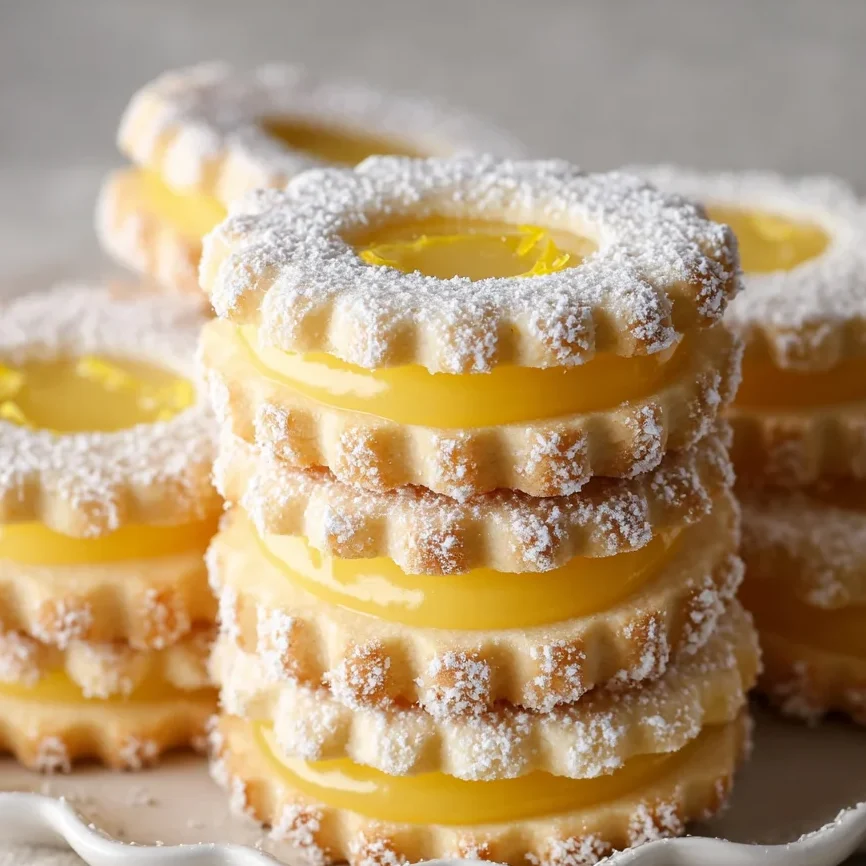
There is something inherently sophisticated about a sandwich cookie, especially one that glows with the vibrant hue of fresh lemon curd. These Lemon Curd Shortbread Sandwich Cookies are a masterclass in texture and flavor contrast. Imagine a delicate, buttery shortbread that snaps ever so slightly before melting on your tongue, followed immediately by the sharp, citrusy zing of homemade lemon curd. Often referred to as Lemon Linzer cookies, these treats are a staple for spring tea parties, holiday dessert platters, or simply as a sunny pick-me-up on a rainy afternoon. In this guide, I will walk you through the nuances of achieving that perfect “melt-in-your-mouth” texture while ensuring your cookies look like they came straight from a high-end European patisserie.

Why You’ll Love This Recipe
You will fall in love with these cookies because they strike the perfect balance between professional aesthetics and home-baked comfort. Unlike many sugar cookies that can be overly sweet or cloying, the inclusion of lemon extract and almond extract in the dough provides a complex aromatic profile that elevates the entire experience. The “roll-then-chill” technique used here ensures that your scalloped edges remain sharp and defined during baking, preventing the “spreading” that often plagues amateur bakers. Furthermore, the versatility of this dough makes it a reliable base for any fruit-filled sandwich cookie, though the pairing of lemon and butter is arguably the most classic and refreshing combination you can make.
What Is a Lemon Curd Shortbread Sandwich Cookie?
At its core, this recipe is a variation of the traditional Austrian Linzer Torte, reimagined as a portable, bite-sized cookie. While a classic Linzer often uses ground nuts (like almonds or hazelnuts) in the dough, our version focuses on a high-quality shortbread base. This creates a smoother, more uniform texture that highlights the creamy nature of the lemon curd filling. The “sandwich” consists of two layers: a solid bottom cookie and a “windowed” top cookie. The window—usually a circle or heart—allows the bright yellow curd to peek through, creating a visual “jewel” effect. It is a dessert that relies on simplicity and high-quality ingredients to make a lasting impression on the palate.
Ingredients Overview
To achieve the best results, every ingredient in this recipe serves a specific structural or flavorful purpose:
- Unsalted Butter: Use high-quality butter with a high fat content. Leaving it out for exactly 10 minutes ensures it is soft enough to cream but cold enough to maintain the dough’s integrity.
- Granulated Sugar: This provides the sweetness and helps in the creaming process to create tiny air pockets for a tender crumb.
- Large Eggs: They act as the binder, providing the necessary structure so the cookies don’t crumble too easily when sandwiched.
- The Extract Trio: Vanilla provides warmth, almond extract adds a “professional bakery” floral note, and lemon extract doubles down on the citrus theme.
- All-Purpose Flour: This provides the protein structure. Ensure you measure using the “spoon and level” method to avoid a dry, tough cookie.
- Lemon Curd: The star of the show. Whether using a store-bought premium brand or the recipe provided below, it must be thick and chilled to prevent it from running out of the sides.
Ingredient Substitutions & Tips
If you need to pivot based on dietary needs or pantry availability, here are my expert recommendations. For a gluten-free version, a high-quality 1-to-1 gluten-free flour blend containing xanthan gum works remarkably well with shortbread. If you find yourself out of lemon extract, you can substitute it with two teaspoons of fresh lemon zest for an equally vibrant flavor. For those who prefer a less tart filling, you can mix the lemon curd with a small amount of softened cream cheese to create a “lemon cheesecake” filling. Lastly, while granulated sugar is used in the dough, never substitute the powdered sugar dusting on top; the fine texture is essential for that classic Linzer finish.
Step-by-Step Instructions
- Creaming for Success: Start by placing your butter, granulated sugar, and salt in the bowl of a stand mixer. Use the paddle attachment and cream on medium speed for 3-4 minutes. You are looking for a pale, fluffy consistency. This step is crucial for the cookie’s texture.
- Emulsifying: Add the eggs one at a time, followed by the vanilla, almond, and lemon extracts. Mix until the streaks of egg disappear. Don’t worry if it looks slightly curdled at first; it will come together once the flour is added.
- The Flour Fold: Turn the mixer to the lowest setting and gradually add the flour. Stop the moment you no longer see white streaks. Overmixing at this stage develops gluten, which will make the cookies tough.
- The Rolling Secret: Instead of chilling a ball of dough, dump the dough onto parchment paper, top with another sheet, and roll it out to 1/8 inch thickness immediately. This ensures a perfectly even thickness without the dough cracking.
- The Chill Factor: Slide the parchment-covered dough onto a baking sheet and refrigerate for at least 20 minutes. This firms up the butter, making the cutting process much cleaner.
- Cutting & Freezing: Cut out an equal number of solid and windowed cookies. Place them on a prepared baking sheet and pop them in the freezer for 5 minutes right before baking. This “thermal shock” prevents the shapes from distorting in the oven.
- Baking: Bake at 350°F for 8-10 minutes. The cookies should be set but not browned. Let them cool completely on a wire rack before assembly.
Expert Baking Tips
One of the most common mistakes is overbaking. These cookies should remain pale; if the edges start to turn golden brown, the shortbread will lose its delicate “short” texture and become crunchy. Another pro tip involves the “window” cookies: always dust the top cookies with powdered sugar before placing them on the lemon curd. If you dust them after assembly, you will cover up the beautiful, glossy yellow center. Finally, if your kitchen is warm, work with only half the dough at a time, keeping the rest in the refrigerator to maintain that essential chill.
The Perfect Lemon Curd Filling
For the absolute best experience, a homemade curd is unparalleled. Combine 3 large egg yolks, 1/2 cup granulated sugar, 1/4 cup fresh lemon juice, and 2 tablespoons of lemon zest in a small saucepan over low heat. Whisk constantly until the mixture thickens enough to coat the back of a spoon. Remove from heat and whisk in 4 tablespoons of cold, cubed butter until smooth. Strain the mixture through a fine-mesh sieve to remove any zest or cooked egg bits, then press plastic wrap directly onto the surface and chill for at least 4 hours. This creates a stable, tangy filling that won’t soak into the cookies.
Serving Suggestions
These cookies are a stunning addition to a tiered high-tea tray alongside cucumber sandwiches and scones. They also pair beautifully with a crisp Earl Grey tea or a light Prosecco. Because of their striking appearance, they make excellent edible gifts—simply stack them in a clear cellophane bag tied with a yellow silk ribbon. For a summer dessert, serve a plate of these cookies with a side of fresh raspberries; the berry tartness complements the lemon beautifully.
Storage & Make-Ahead Tips
Shortbread is excellent for making ahead. You can freeze the unbaked, cut-out dough shapes for up to three months. When ready to bake, just add an extra minute to the oven time. Once assembled with the lemon curd, the cookies are best enjoyed within 24 hours as the curd will eventually soften the shortbread. To keep them as crisp as possible, store them in a single layer in an airtight container at room temperature for up to 2 days, or in the refrigerator for up to 5 days.
FAQs
Q: Can I use bottled lemon juice for the curd?
A: While possible, fresh lemon juice is highly recommended. Bottled juice often has a metallic aftertaste and lacks the vibrant punch needed to balance the buttery shortbread.
Q: Why did my cookies spread so much in the oven?
A: This usually happens if the butter was too warm or if the dough wasn’t chilled sufficiently. Make sure to follow the freezer-chill step right before the cookies go into the oven.
Q: Can I use a different filling?
A: Absolutely. Raspberry jam, apricot preserves, or even chocolate ganache work wonderfully with this shortbread base. Just ensure the filling is thick.
Q: How do I get a clean cut-out?
A: Dip your cookie cutters in flour between every few cuts. This prevents the dough from sticking to the intricate scalloped edges.
Q: My curd is too runny, what should I do?
A: If your curd isn’t holding its shape, you can whisk in a little extra butter while it’s warm or ensure it has chilled for at least 4-6 hours to set properly.
Mastering the Lemon Curd Shortbread Sandwich Cookie is a rewarding journey for any home baker. It combines the technical skills of dough temperature management with the artistic flair of pastry assembly. When you pull that tray of pale, perfect cookies from the oven and see the bright yellow centers peeking through a snowy dusting of sugar, you’ll know the effort was worth it. Happy baking!