
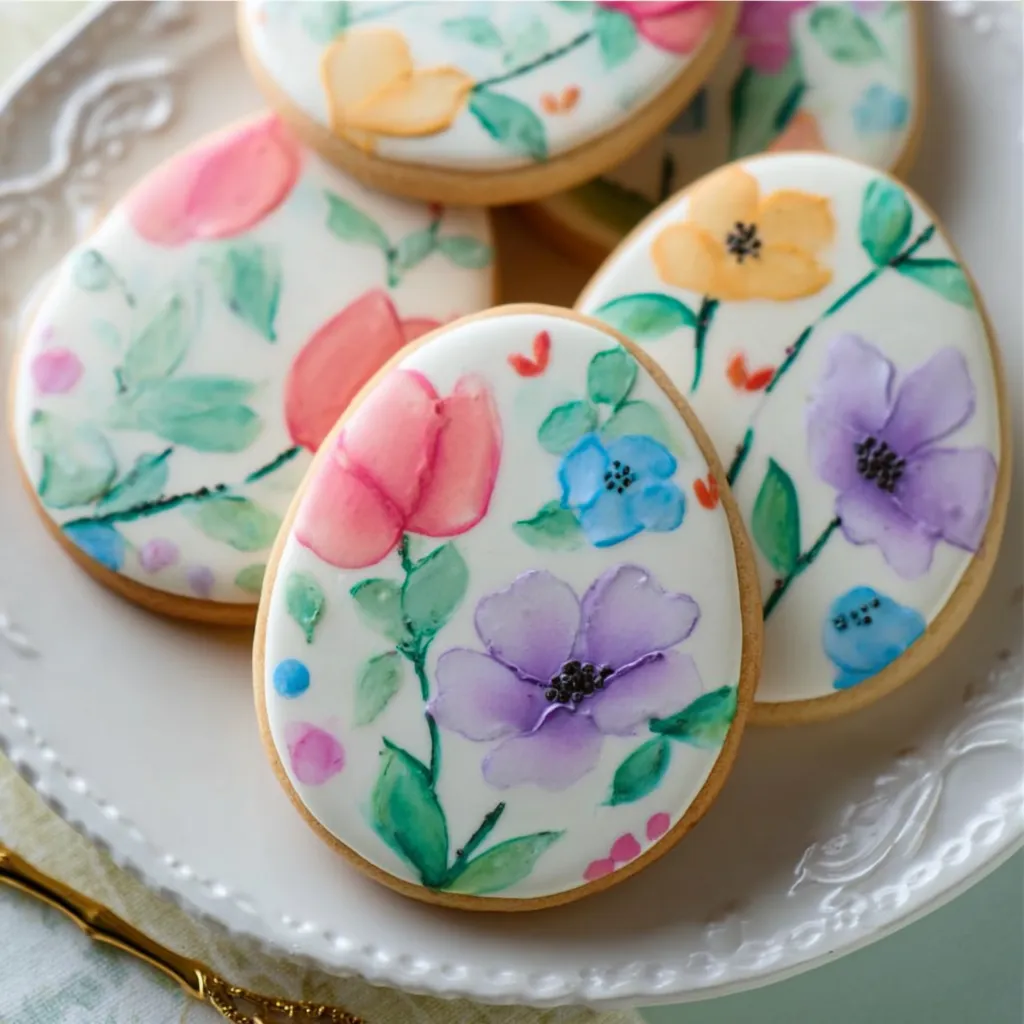
Spring is the season of renewal, and nothing captures the essence of a blooming garden quite like these Watercolor Floral Easter Egg Cookies. If you are looking to move beyond basic sprinkles and buttercream this year, this technique offers a sophisticated, artistic alternative that will leave your guests wondering if you bought them from a high-end boutique bakery. By combining the smooth canvas of fondant with the fluid beauty of edible watercolors, we create a dessert that is as much a craft project as it is a culinary delight. These cookies aren’t just treats; they are miniature impressionist paintings that bring a touch of elegance to any Easter basket or dessert table.
Why You’ll Love This Recipe
You will absolutely fall in love with this recipe because it strikes the perfect balance between creativity and simplicity. Unlike intricate piping which requires a very steady hand and years of practice, the watercolor technique is intentionally “messy” and artistic. No two cookies will look exactly the same, giving each one a unique, handmade charm. Additionally, the use of lemon extract as a mixing medium ensures the fondant stays firm while adding a subtle, bright citrus note that cuts through the sweetness of the sugar. It is a high-impact decorating style that is surprisingly approachable for intermediate bakers looking to level up their food styling game.
What Is a Watercolor Fondant Cookie?
A watercolor fondant cookie is a modern confectionery masterpiece where traditional sugar cookies are topped with a thin layer of “painted” fondant. Instead of using traditional paint, we use concentrated icing gels thinned with high-proof alcohol or pure extracts (like lemon). This creates a translucent, ink-like substance that behaves exactly like watercolor paint on paper. The fondant acts as the “canvas,” absorbing the pigment while maintaining its structural integrity. This method allows for beautiful gradients, soft edges, and vibrant color blending that is impossible to achieve with standard frosting techniques, making it a favorite for professional food stylists and hobbyists alike.
Ingredients you will need
To achieve the perfect watercolor effect, quality ingredients are paramount. You will need:
- Roll-Out Cookie Dough: A sturdy sugar cookie or shortbread base that won’t spread during baking is essential to ensure your fondant eggs fit perfectly.
- Decorator Preferred White Fondant: This provides the smooth, bright white base necessary for colors to “pop.”
- Icing Colors (Lemon Yellow, Golden Yellow, Violet, Pink, Kelly Green, Sky Blue, Creamy Peach): Gel-based colors are highly concentrated, meaning a tiny drop goes a long way.
- Pure Lemon Extract: This is the secret “solvent.” Because it has a high alcohol content, it evaporates quickly, allowing the paint to dry without making the fondant sticky or melting the sugar.
- Apricot Glaze or Clear Piping Gel: This acts as the “glue” to secure your artistic fondant topper to the cookie base.
- Edible Markers: Specifically, the FoodWriter® extra-fine tip in black is used to add illustrative details and “sketchy” outlines that define the floral shapes.
Ingredient Substitutions & Tips
If you cannot find Pure Lemon Extract, you can substitute it with Clear Vanilla Extract or even a high-proof clear spirit like Vodka. The goal is to use a liquid that evaporates faster than water. For the Apricot Glaze, any light-colored jam (like peach or white grape) will work as long as it is strained of any fruit chunks. If you prefer a vegan option, ensure your fondant brand is certified vegan, as some contain gelatin. For the cookie base, you can swap the standard vanilla dough for a lemon-zest infused shortbread or even a light almond sugar cookie to complement the floral aesthetics.
Step-by-Step Instructions
1. Bake the Foundation
Begin by rolling out your prepared cookie dough to a consistent 1/16 inch thickness. Using the egg-shaped cutter from your 3-piece set, cut out your cookies. Place them on a 14×20 aluminum cookie sheet and bake according to your recipe’s specifics. Once baked, transfer them to a non-stick cooling grid. They must be completely cool before you attempt to attach the fondant, or the heat will melt your “glue.”
2. Prepare the Artistic Canvas
Roll out your white fondant on a surface lightly dusted with cornstarch to a 1/16 inch thickness. It should be thin enough to be delicate but thick enough to handle. Do not cut the egg shapes yet; we want to paint on a large sheet of fondant first to allow for a continuous floral pattern.
3. Mixing the Edible Paints
In a small palette, place a tiny drop of each icing color. Add several drops of Pure Lemon Extract to each. Mix until the consistency is like thin ink. For the yellow flowers, blend Lemon Yellow and Golden Yellow. For the violets, mix Violet with a hint of Pink to create a rich, multi-tonal purple.
4. Painting the Florals
Using your 5-piece brush set, paint soft, rounded flower shapes roughly 1.5 inches in diameter. Work randomly across the fondant. While the “paint” is still wet, drop a different color into the centers—this creates a beautiful “bleeding” effect typical of watercolor art. Paint a few Kelly Green leaves around the blooms.
5. Detailing and Assembly
Once the paint has dried for about five minutes, use the black FoodWriter marker to draw rough, artistic outlines. Don’t worry about being perfect; loose lines add to the charm. Use the egg cutter to cut out shapes from the painted fondant. Brush a thin layer of apricot glaze on the cookies and gently press the fondant eggs onto the surface.
Expert Baking & Cooking Tips
For the best results, always blot your brush on a paper towel after dipping it into the “paint.” Too much liquid can cause the fondant to pit or become “mushy.” Another professional tip is to work in a cool, dry environment. Humidity is the enemy of fondant; if it’s too humid, the watercolor will take much longer to set and may bleed more than intended. Finally, when using the edible marker, use a very light touch. The “nib” can gouge the fondant if you press too hard. Think of it as “flicking” the color onto the surface rather than drawing a heavy line.
The Science of Edible Watercolor
Why do we use lemon extract instead of water? It comes down to evaporation rates. Water is a solvent that dissolves sugar. Since fondant is almost entirely sugar, water will sit on the surface, dissolve the top layer, and create a sticky, pitted mess that never truly dries. Pure Lemon Extract contains a high percentage of alcohol. Alcohol has a much lower boiling point than water, meaning it evaporates into the air almost immediately after being applied to the fondant. This leaves the pigment behind on the surface while the liquid vanishes, resulting in a crisp, dry, and professional finish that is safe to handle.
Serving Suggestions
These cookies are a showstopper on their own, but they look particularly stunning when served on a white marble slab or a rustic wooden board to contrast the vibrant colors. For a spring tea party, pair them with Earl Grey tea or a light sparkling rosé. If you are gifting them, place them in clear cellophane bags tied with a pastel grosgrain ribbon. They also make wonderful place settings for an Easter brunch table—simply write the guest’s name on the fondant using the edible marker for a personalized touch.
Storage & Make-Ahead Tips
These cookies are excellent for making ahead of time. You can bake the cookie bases up to three days in advance and store them in an airtight container. Once decorated with fondant, the cookies should be stored at room temperature in a single layer. Do not refrigerate decorated fondant cookies, as the transition from the cold fridge to room temperature causes condensation (sweating), which will ruin your beautiful watercolor painting. They will stay fresh for 5–7 days.
FAQs
1. Can I use liquid food coloring instead of gel?
It is not recommended. Liquid food coloring is already diluted with water, which can make the fondant sticky. Gel colors provide the most vibrant pigment while allowing you to control the dilution with extract.
2. How long does it take for the “paint” to dry?
Depending on the humidity in your kitchen, it usually takes between 5 to 15 minutes. If it feels tacky to the touch, give it a few more minutes before using the edible marker.
3. My fondant is cracking, what should I do?
If your fondant is cracking, it has become too dry. You can knead in a tiny bit of vegetable shortening to restore its elasticity before rolling it out.
4. Can I use this technique on royal icing?
Yes! However, the royal icing must be completely dried (hardened) for at least 24 hours before you paint on it, otherwise the brush will break the surface.
5. Is the lemon flavor very strong?
Surprisingly, no. Most of the extract evaporates, leaving behind only a very faint, pleasant citrus aroma that complements the sweet cookie.
Mastering the Watercolor Floral Easter Egg Cookie technique is a rewarding journey into the world of edible art. It allows you to express your creativity while providing a delicious treat that stands out from the crowd. Whether you are an experienced baker or a curious beginner, the fluid nature of watercolor means you can’t go wrong. Embrace the imperfections, enjoy the process of blending colors, and celebrate the beauty of spring with every bite!
PrintWatercolor Floral Easter Egg Cookies
These Watercolor Floral Easter Egg Cookies elevate standard sugar cookies into edible works of art. Using a ‘wet-on-wet’ painting technique with food coloring and lemon extract, you can create a stunning impressionist floral look that is perfect for Easter baskets or spring brunches.
Ingredients
1 lb Roll-Out Cookie Dough (chilled)
24 oz. Decorator Preferred White Fondant
1 oz. Lemon Yellow Icing Color
1 oz. Golden Yellow Icing Color
1 oz. Violet Icing Color
1 oz. Pink Icing Color
1 oz. Kelly Green Icing Color
1 oz. Sky Blue Icing Color
1 oz. Creamy Peach Icing Color
2 oz. Pure Lemon Extract
10 oz. Clear Piping Gel or Apricot Glaze
Black FoodWriter® Extra Fine Tip Edible Markers
Instructions
1. Prepare and bake cookies: Roll out cookie dough to 1/16 inch thickness. Use the egg cutter to cut shapes. Bake according to your recipe and cool completely on a non-stick cooling grid.
2. Prepare the ‘paint’: In a palette or small bowls, mix individual icing colors with a few drops of pure lemon extract until you reach a thin, watercolor consistency.
3. Paint the fondant: Roll out white fondant to 1/16 inch thickness. Use a food-safe brush to paint rounded flower shapes (approx. 1.5 inches) randomly across the fondant. Drop a different color into the centers while the paint is still wet for a blended effect.
4. Add greenery and dry: Paint 1-2 Kelly Green leaves per flower. Let the fondant dry for 5-10 minutes until the surface is no longer tacky.
5. Detailing: Use the black FoodWriter marker to draw loose, gestural outlines around the flowers and leaves. Add dots or small lines to the centers for depth.
6. Assemble: Use the egg cutter to cut shapes out of the painted fondant. Brush the top of each cooled cookie with a thin layer of piping gel or apricot glaze, then gently press the fondant egg onto the cookie.
Notes
Always use Pure Lemon Extract rather than water; the alcohol content allows the paint to dry quickly without dissolving the sugar in the fondant.
Work in small sections to ensure the ‘wet-on-wet’ blending effect works before the extract evaporates.